
Valentino Rossi's Aragon MotoGP Gamble: A Race Against Time
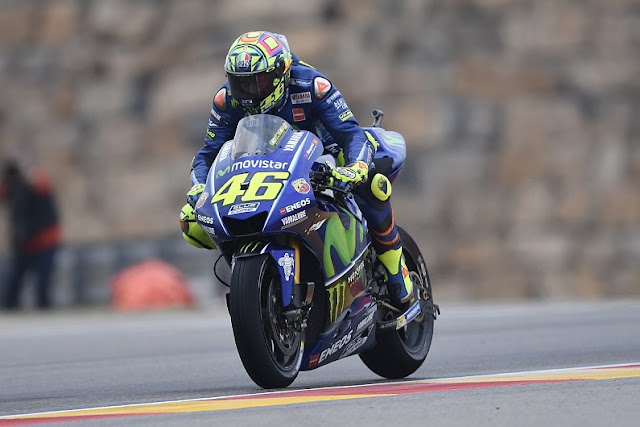
The 2017 Aragon MotoGP weekend was fraught with uncertainty surrounding Valentino Rossi's participation. Just 22 days prior, "The Doctor" had suffered a broken leg in a motocross accident, casting a significant shadow over his championship aspirations. His presence at Aragon was a testament to his relentless determination and the remarkable advancements in sports medicine. However, the question remained: could Rossi truly compete at the highest level, or was he pushing himself too soon? The damp conditions of Friday's free practice sessions offered a temporary reprieve, masking the true extent of his injury. But the looming prospect of a dry race on Sunday presented a far greater challenge, one that would ultimately determine whether Rossi could continue his quest for a tenth world title.
The atmosphere in the paddock was electric. Rossi's fans, the "Yellow Army," were a visible force, their hopes and anxieties palpable. His rivals, while sympathetic to his injury, were also keenly aware of the opportunity his absence or reduced performance presented. The championship battle was intensifying, with Marc Marquez and Andrea Dovizioso locked in a fierce duel for the lead. Every point mattered, and Rossi's participation, even in a compromised state, could significantly impact the outcome of the season. The Aragon Grand Prix, therefore, became more than just another race; it was a crucial test of Rossi's physical and mental fortitude, a dramatic chapter in his legendary career.

Friday's Wet Practice: A Temporary Reprieve
The wet conditions that greeted the MotoGP riders on Friday at Aragon proved to be a double-edged sword for Valentino Rossi. While the rain minimized the strain on his recovering leg, it also provided a less-than-ideal assessment of his true fitness. He completed both free practice sessions, finishing the day in 20th place, a significant 2.059 seconds behind pacesetter Dani Pedrosa. This position was far from representative of Rossi's usual competitiveness, but the circumstances were far from normal.
Rossi himself acknowledged the mitigating factors. "With the conditions of today, if it's wet, I don't have particular problems," he stated. He explained that the reduced grip and lower speeds in the wet meant less stress on his leg and upper body. He didn’t feel much pain, and there was no swelling after the sessions, which was a positive sign. However, he was acutely aware that the dry conditions would present a much sterner test.
The wet track allowed Rossi to use a riding style more akin to riding his Yamaha R1 road bike, which he had tested at Misano earlier in the week. He noted that the M1 MotoGP bike in dry conditions demanded a more aggressive riding style, requiring greater movement on the bike and more reliance on upper body strength for braking and cornering. This raised serious concerns about his ability to maintain a competitive pace in the dry, given his weakened leg.
The Dry Track Dilemma: A True Test of Fitness
Rossi's primary concern revolved around the demands of riding a MotoGP bike in dry conditions. He emphasized the increased effort required from his arms and shoulders, particularly during braking. "I have to ride a bit more, in the dry it's more effort on the arms, the shoulders because in braking I don't have the power of the leg to brake the bike," he explained. This lack of leg strength would force him to compensate with his upper body, potentially leading to fatigue and reduced control.
Furthermore, the aggressive riding style required in the dry, involving more movement on the bike and greater lean angles, would further challenge his physical limitations. He needed to shift his weight more dynamically from side to side, placing added stress on his recovering leg. This movement was crucial for maintaining balance and maximizing grip, but it also posed a significant risk of exacerbating his injury.
The team and Rossi needed to carefully analyze the data from Friday's sessions and make adjustments to the bike setup to minimize the strain on his body. This might involve modifying the braking system, adjusting the suspension, or altering the riding position. However, ultimately, Rossi's performance in the dry would depend on his ability to adapt and overcome his physical limitations.

Van der Mark on Standby: A Potential MotoGP Debut Awaits
Yamaha had taken the precaution of placing World Superbike rider Michael van der Mark on standby for the Aragon weekend. This decision underscored the uncertainty surrounding Rossi's fitness and the team's commitment to fielding a competitive entry, regardless of Rossi's condition. Van der Mark, a highly respected rider in the Superbike World Championship, represented a capable replacement should Rossi be unable to race.
While van der Mark expressed his disappointment at potentially missing out on his MotoGP debut, he remained optimistic about the opportunity to test the Yamaha M1 in the future. "Looks like he Rossi is fit, he's looking good, he has no pain, so this is really positive for him," van der Mark stated. "I spoke with Yamaha, and I will be testing a bike soon, so even though I'm not riding, I will get a nice test."
The prospect of testing the M1 was a significant reward for van der Mark's professionalism and willingness to step in at short notice. It provided him with valuable experience and exposure to the MotoGP world, potentially opening doors for future opportunities. It also demonstrated Yamaha's commitment to nurturing young talent and providing them with a pathway to the premier class of motorcycle racing.
Championship Implications: Rossi's Fight for the Title
Valentino Rossi's injury and subsequent struggle to compete at Aragon had significant implications for the 2017 MotoGP championship. Prior to his accident, Rossi was a strong contender for the title, consistently scoring podium finishes and challenging the likes of Marc Marquez and Andrea Dovizioso. His absence or reduced performance at Aragon risked derailing his championship aspirations.
At the time, the championship standings were incredibly tight, with Marquez and Dovizioso engaged in a head-to-head battle for the lead. Rossi's ability to score points at Aragon could potentially swing the momentum in his favor, or conversely, allow his rivals to extend their advantage. Every point mattered in this closely contested championship, and Rossi's presence, even in a compromised state, added another layer of intrigue to the title race.
Rossi's fans, known for their unwavering support, were desperate to see him back on the podium. They understood the risks involved, but they also knew that Rossi possessed the skill and determination to overcome adversity. His participation at Aragon was a testament to his fighting spirit and his commitment to his fans, even in the face of significant challenges. [Consider reading more about Rossi's championship history here].

The Aragon Race: A Chronicle of Pain and Perseverance (Hypothetical)
While the original article focused on the lead-up to the race, let's imagine how the Aragon Grand Prix unfolded for Valentino Rossi. Assume, for the sake of this narrative, that Rossi gritted his teeth and started the race despite the pain. He likely started further down the grid than usual due to his limited dry track time. The opening laps would have been crucial, as he attempted to make up positions while conserving energy and managing his injury.
The race would have been a grueling test of endurance. Every braking zone, every corner, every acceleration would have sent jolts of pain through his recovering leg. He would have had to rely heavily on his experience and skill to compensate for his physical limitations. Overtaking maneuvers would have been particularly challenging, requiring precise timing and maximum effort. It's likely he would have adopted a smoother, more controlled riding style to minimize the strain on his body.
As the race progressed, fatigue would have inevitably set in. His lap times would have likely slowed, and his ability to defend his position would have diminished. The final laps would have been a battle against both his rivals and his own body. Crossing the finish line, regardless of the result, would have been a victory in itself, a testament to his unwavering determination and his refusal to give up. This hypothetical scenario highlights the incredible mental and physical strength required to compete at the highest level of MotoGP, especially when facing significant adversity. [Check out race highlights from similar events for context].
Conclusion: A Legacy of Resilience
Valentino Rossi's participation in the 2017 Aragon MotoGP race, despite his recent injury, exemplified his remarkable resilience and unwavering commitment to the sport. While the wet conditions of Friday's practice sessions offered a temporary reprieve, the looming prospect of a dry race presented a significant challenge. Rossi's ability to adapt to the demands of riding a MotoGP bike in the dry, while managing his pain and physical limitations, would ultimately determine his success.
Whether he achieved a podium finish or simply completed the race, his presence at Aragon was a testament to his fighting spirit and his enduring passion for motorcycle racing. His willingness to push himself to the limit, even in the face of adversity, inspired his fans and solidified his legacy as one of the greatest riders of all time. The Aragon Grand Prix, therefore, became a defining moment in Rossi's career, a powerful reminder of his unwavering determination and his ability to overcome any obstacle.
The 2017 season was a thrilling one for MotoGP fans, and Rossi's comeback attempt at Aragon added another layer of drama to the championship battle. His performance, regardless of the outcome, served as an inspiration to riders and fans alike, demonstrating the power of perseverance and the unwavering spirit of a true champion. Rossi's legacy extends far beyond race wins and championship titles; it encompasses his passion, his dedication, and his unwavering commitment to the sport he loves. [Explore other articles about MotoGP legends].
References
This article was compiled using information from the following sources:
Editorial Notice: This article was written to provide historical context and narrative insight into Valentino Rossi's career beyond race results. Information is based on publicly available records and editorial interpretation.
AI-assisted content: This article was enhanced using AI writing tools. Content has been curated and compiled from multiple web resources, official race records, and historical archives to provide comprehensive coverage of the topic.


 Posts
Posts


 Valentino Rossi born 16 February 1979 is an Italian professional motorcycle road racer and multiple MotoGP World Champion. He is one of the most successful motorcycle racers of all time, with nine Grand Prix World Championships to his name – seven of which are in the premier class.
No comments:
Post a Comment
What are your thoughts ?